In the fast-evolving landscape of 2026, the definition of a “creative professional” has transformed. The boundary between traditional fine arts and digital illustration has essentially vanished. Today’s artist is a hybrid—one moment sketching with a charcoal stick on high-grain paper, and the next, manipulating 3D models with a haptic stylus on a high-definition tablet.
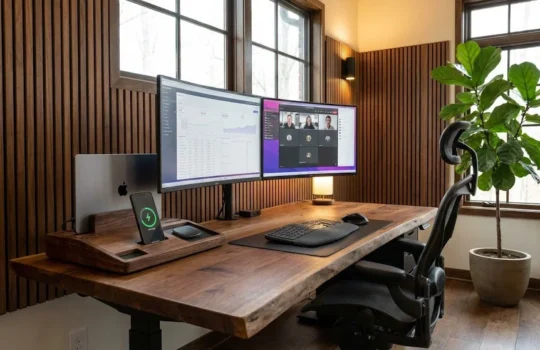
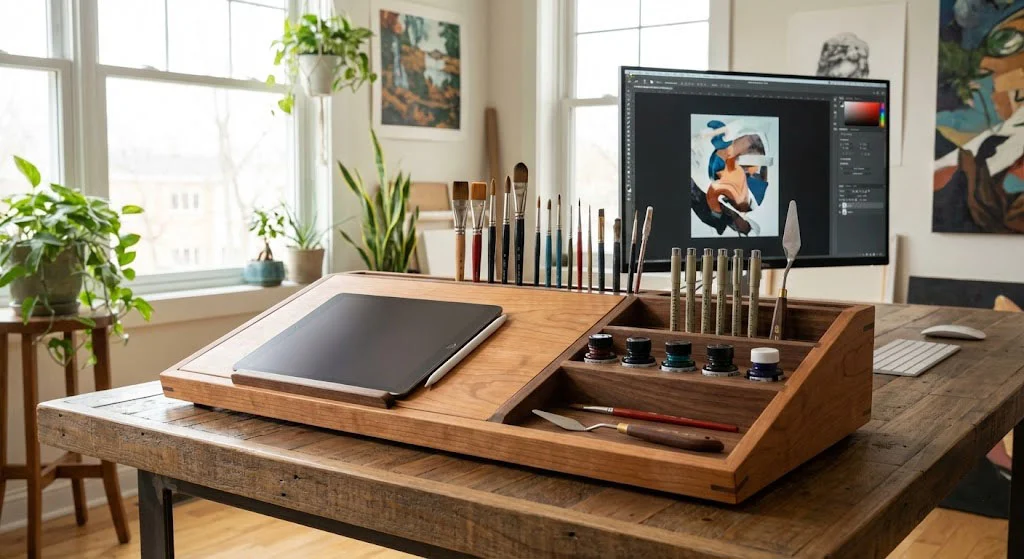
However, this fusion of worlds brings a unique challenge: the clutter of tools. When an artist loses their “Flow State” because they spent ten minutes hunting for a specific micron pen or a replacement nib for their Apple Pencil, the creative spark can flicker out. To combat this, the concept of the “Artist’s Sanctuary” has emerged—a workspace centered around a bespoke, solid wood desk organizer that bridges the gap between the analog and the digital.
The Creative Struggle: Why Order Feeds the Muse
For centuries, the “disorganized artist” was a romanticized trope. But in the high-pressure environment of 2026, chaos is no longer seen as a badge of honor; it is a barrier to entry. Research into environmental psychology suggests that visual clutter acts as a constant “micro-distraction,” draining the cognitive energy required for deep, imaginative work.
An Artist’s Sanctuary is a space designed to eliminate these distractions. By using a central, handcrafted wooden anchor, an artist can organize their arsenal so that every tool is an extension of their hand. The goal isn’t just “neatness”, it’s accessibility. When your most-used brushes, pens, and digital tools are within a peripheral reach, your brain can stay locked into the “Flow State,” where time disappears and the work takes over.
Categorizing the Creative Arsenal: Digital meets Analog
The 2026 tech suite is complex. An artist’s organizer must do more than just hold pens. It must manage a diverse “Hybrid Arsenal”:
-
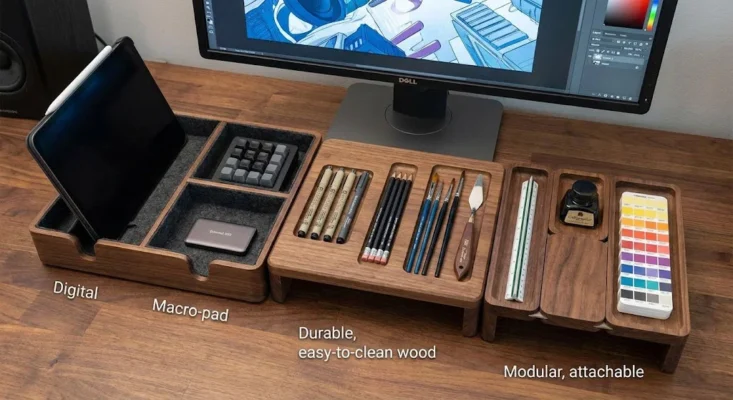
The Digital Suite: This includes high-sensitivity styluses, tablet stands, macro-pads for shortcuts, and external SSDs for large project files. These tools are fragile and expensive, requiring protected, felt-lined slots.
-
The Analog Essentials: Technical pens, graphite pencils, specialized brushes, and palette knives. Unlike digital tools, these often come with messy components like ink or lead, requiring materials that are easy to clean yet durable.
-
The Specialized Extras: Every artist has a “niche” tool—a specific architect’s scale, a calligrapher’s ink pot, or a graphic designer’s color swatch book. A true Sanctuary accommodates these unique needs through modular design.
The Anatomy of an Artist-Centric Organizer
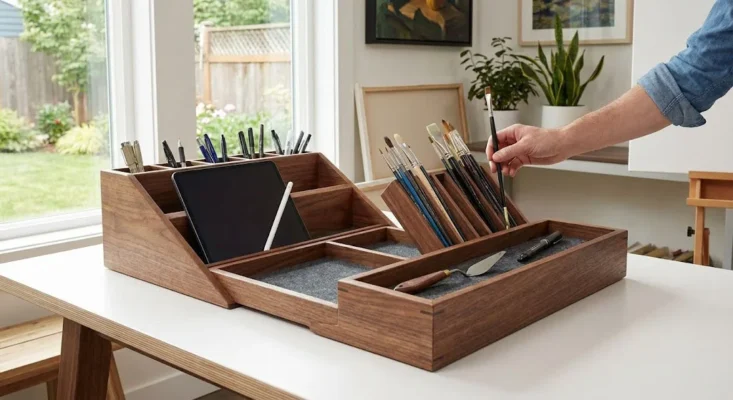
Standard office organizers fail the artist because they don’t account for the length, weight, and sensitivity of creative tools. In 2026, the premier choice for artists is a bespoke wood organizer with these specific architectural features:
-
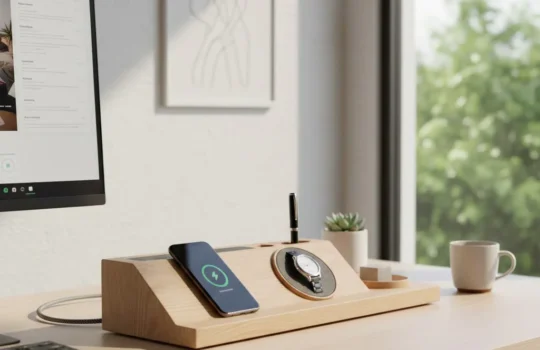
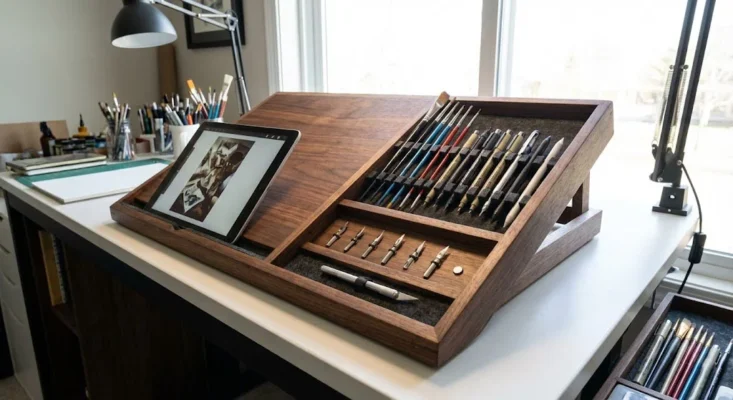
Slanted Visibility: Traditional “cup” style holders hide the tips of pens. Artists prefer slanted, tiered slots that allow them to see the exact nib or brush head at a glance.
-
Felt-Lined Protection: High-end styluses and fountain pens have delicate finishes. Premium organizers feature hand-pressed felt linings (often in charcoal or forest green) to prevent scratches.
-
Integrated Magnetic Modules: Beneath the wood surface, rare-earth magnets are often embedded. These “invisibly” hold onto metal items like nibs, paperclips, or X-Acto blades, keeping them from rolling away or getting lost.
-
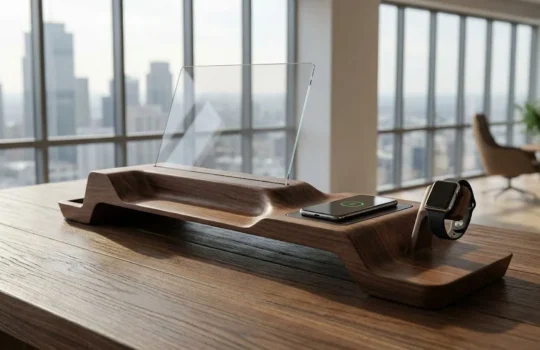
Angled Tablet Grooves: Many artists use their tablet as a second screen for reference. A built-in groove at a 15-degree angle allows for comfortable viewing without taking up extra desk space.
Materiality and the Psychology of Wood
The choice of wood in an artist’s studio is more than an aesthetic decision; it influences the mood of the creator. In 2026, three timbers have become the standard for the creative elite:
-
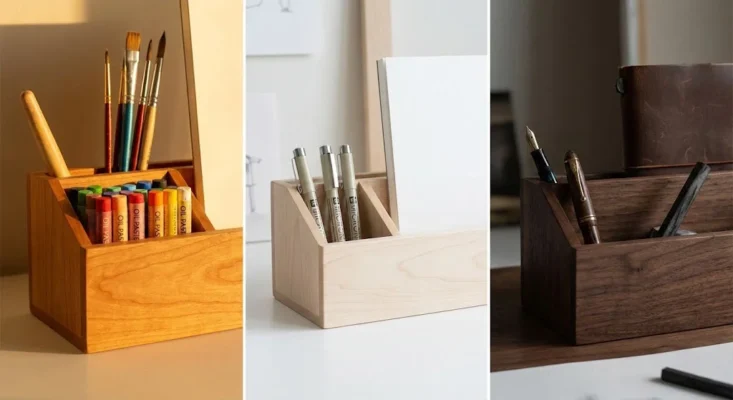
The Warmth of Cherry Wood: With its reddish-gold undertones, Cherry wood is believed to stimulate emotion and passion. It is the favorite of painters and illustrators who work with vibrant color palettes.
-
The Clarity of White Maple: Clean, bright, and nearly grainless, Maple provides a “blank canvas” feel. It is highly favored by architects and minimalist designers who need a workspace that feels light and unobstructed.
-
The Depth of Black Walnut: For the master craftsman or the legacy artist, Walnut offers a sense of weight and history. It projects authority and is often used by those who want their studio to feel like a timeless sanctuary.
Designing for Specialized Personas
Not all artists work the same way. The “Artist’s Sanctuary” is often tailored to specific creative “Personas”:
-
The Digital Illustrator: Their setup focuses on cable management for charging docks and a dedicated “holster” for their stylus. The wood organizer acts as a cooling dock for their primary tablet.
-
The Traditional Calligrapher: Their needs are physical. They require wide, horizontal trays for long dip-pens and recessed holes designed to hold ink bottles securely, preventing disastrous spills on expensive vellum.
-
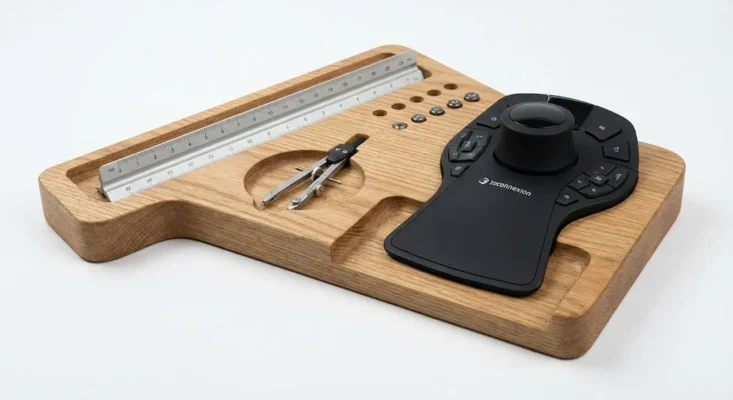
The Architect/Industrial Designer: This persona requires precision. Their organizer often includes dedicated slots for scale rulers, compasses, and various lead grades, alongside a dock for their 3D mouse or controller.
The “Creative Reset”: A Ritual of Renewal
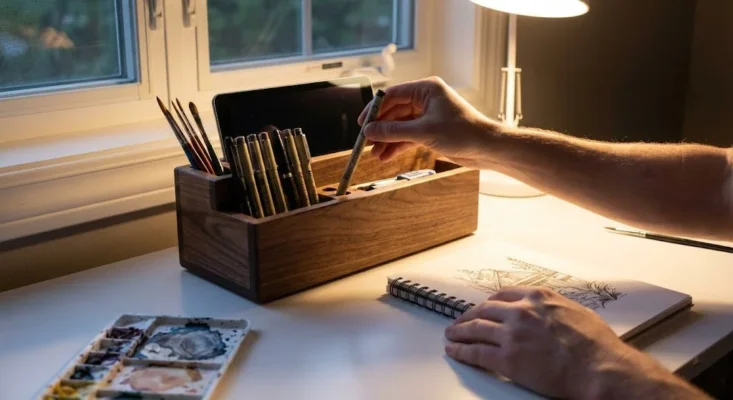
The most successful artists of 2026 practice the “Creative Reset.” This is the act of returning every tool to its wooden home at the end of a session.
This ritual serves two purposes. First, it acts as a psychological “off switch,” helping the artist transition from the intensity of creation back to daily life. Second, it ensures that when they return to the desk the next day, they are greeted by a “clean canvas.” There is no friction, only a beautifully organized set of tools waiting to be picked up. The wood organizer makes this ritual satisfying; the click of a pen entering its slot and the feel of the smooth timber under the hand turn “cleaning up” into a moment of mindfulness.
An Investment in Your Legacy
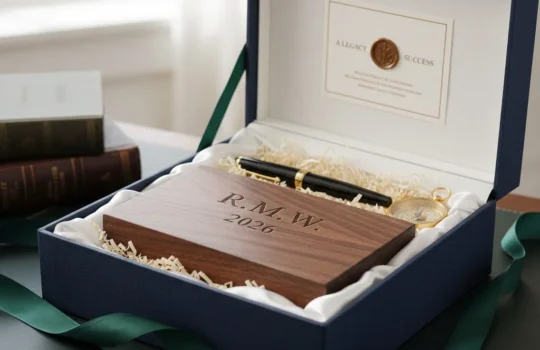
An artist’s tools are their livelihood. In 2026, investing in a solid wood organizer is an investment in the quality of the work produced. It is about moving away from the “disposable” culture of plastic and embracing a material that grows more beautiful with age—much like the artist’s own skill.
Whether you are a student just beginning your journey or a seasoned professional with a decade of projects behind you, a dedicated Artist’s Sanctuary provides the stability and inspiration needed to create your next masterpiece. When your tools are honored, your work reflects that respect.