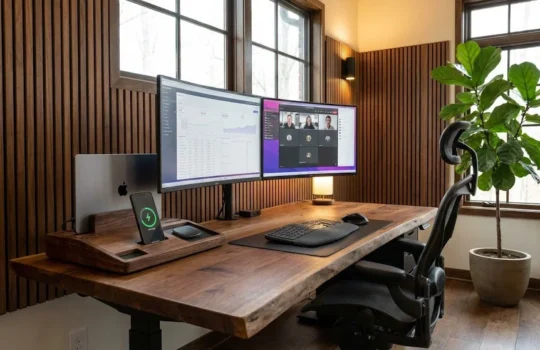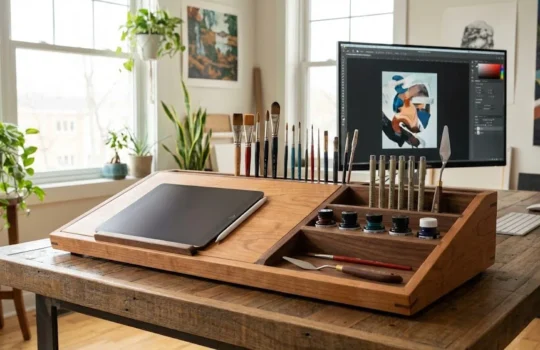
In the professional landscape of 2026, we find ourselves at a fascinating crossroads. Technology has become more integrated into our lives than ever before—from AI-augmented tablets to ultra-thin wearables—yet our aesthetic desires have swung toward the natural, the tactile, and the quiet. The modern executive or creative doesn’t want their desk to look like a server room; they want it to feel like a sanctuary.
This shift has given birth to the “Hidden Tech” movement. It is the practice of housing cutting-edge hardware within handcrafted, organic materials like solid wood. By “taming” our devices through clever engineering and natural design, we can maintain high-level productivity without the visual chaos of cables and plastic docks.
The “Invisitech” Revolution: Power Without the Clutter
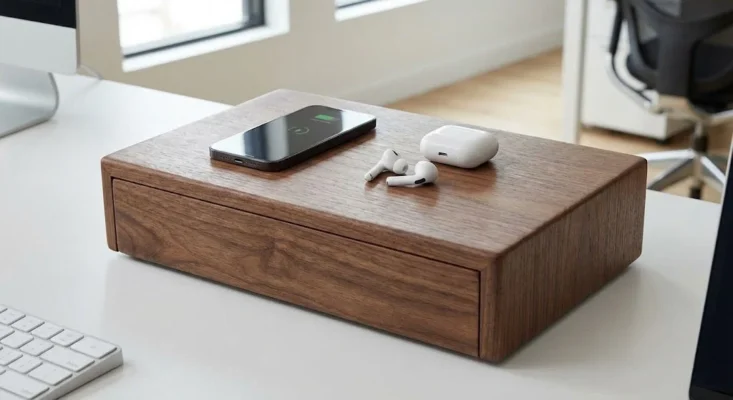
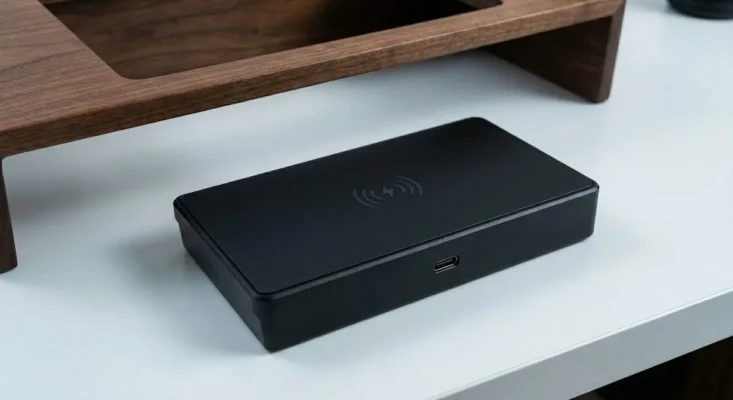
By 2026, charging technology has moved beyond the clunky pads of the early 2020s. The gold standard is now Invisible Qi2 Charging. Imagine a solid block of American Black Walnut or White Oak. To the naked eye, it is simply a beautiful piece of craftsmanship. However, beneath that 5mm layer of wood grain lies a high-frequency induction coil. When you place your smartphone or wireless earbuds on the wood surface, they begin to charge instantly.
This is the core of the “Hidden Tech” philosophy: utility that disappears when not in use. It removes the “plastic tax” from your desk—the ugly white or black charging pads that break the visual flow of a premium workspace. In 2026, power is felt, not seen.
Cable Stealth: Achieving the “Zero-Wire” Aesthetic
The biggest enemy of a focused mind is “cable gore”—the tangled mess of USB-C, lightning, and power cords that inevitably clutter a desk. A professional “Hidden Tech” suite utilizes internal routing channels to solve this.
-
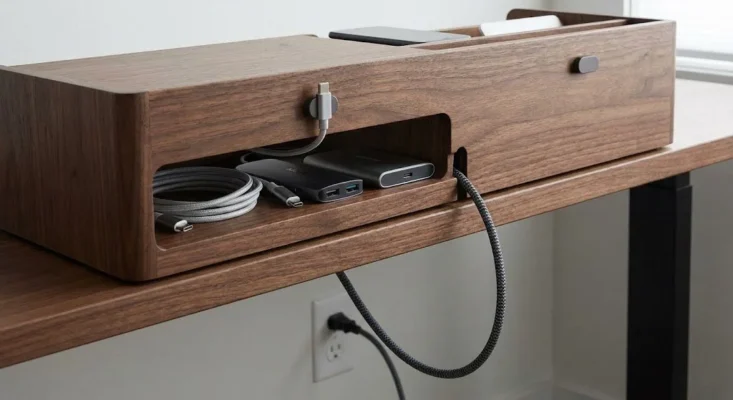
Under-Chassis Management: Premium wood organizers are now CNC-machined with hollowed-out “basements.” This allows you to tuck away long cables, multi-port hubs, and even small SSD drives.
-
The Single-Cable Solution: The ultimate goal of the 2026 setup is to have only one high-quality, braided cable exiting the back of the wood organizer and leading to a power source. All the “magic” happens inside the wood.
-
Magnetic Guidance: Many organizers now incorporate hidden magnets that snap cables into place, ensuring that your charging leads never slip behind the desk when disconnected.
Curating the 2026 Device Suite
A “Hidden Tech” organizer isn’t just a tray; it’s a tailored architecture for your specific tools. Here is how the most successful professionals are organizing their suites this year:
-
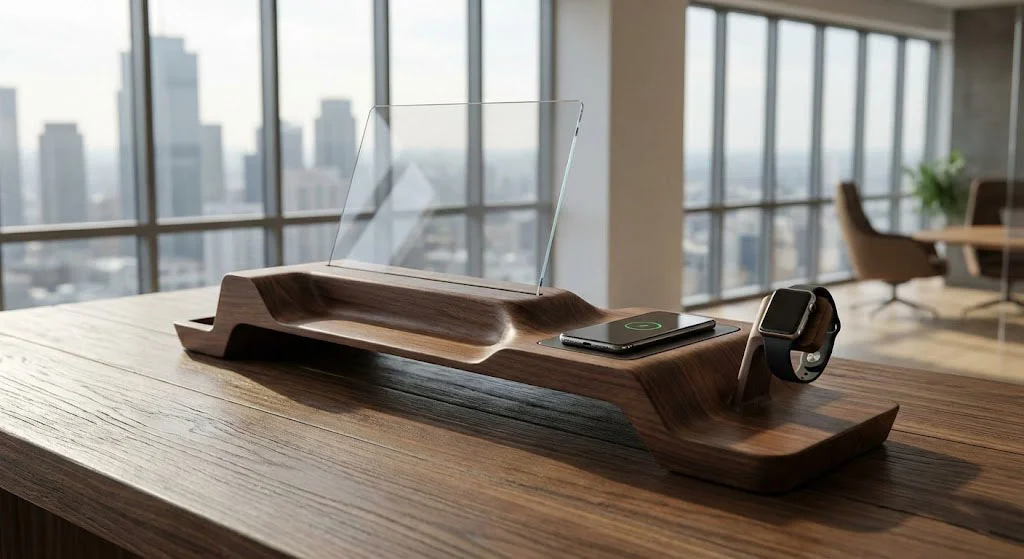
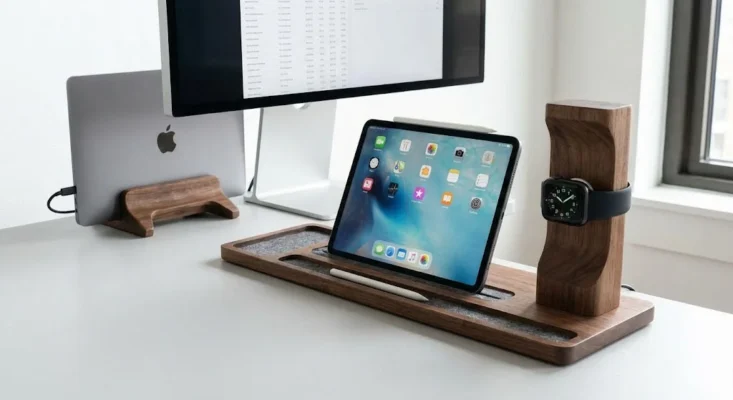
Vertical Stands for AI-Laptops: Instead of having a laptop take up 50% of the desk surface, vertical wood stands hold the machine upright in “clamshell mode,” connecting it to a minimalist monitor.
-
The Tablet Dock: With the rise of the iPad Pro and similar tablets as primary work devices, wood organizers feature felt-lined grooves that hold these screens at the perfect 15-degree angle for stylus work or video calls.
-
Watch Stand Architecture: The smartwatch has become a vital health and productivity tool. A “Hidden Tech” setup provides a dedicated wood pillar for the watch, hiding the inductive puck inside so the watch appears to “float” while it charges, doubling as a sophisticated desk clock.
The Psychology of the Analog-Digital Balance
Why hide the tech in wood? The answer lies in Environmental Psychology. Constant exposure to “cold” materials—glass, aluminum, and plastic—can lead to digital fatigue. Wood, as a living material, provides Biophilic benefits. It lowers heart rates and induces a sense of calm. When you touch a smooth, hand-finished walnut surface to reach for your phone, you experience a “haptic reset.”
Furthermore, “Hidden Tech” promotes Intentionality. By having a specific “home” for your phone within a wood organizer, you reduce the habit of mindless checking. You are training your brain to see the device as a tool to be picked up and put down, rather than an extension of your hand.

Future-Proofing Through Modular Craftsmanship
One of the main criticisms of tech accessories is that they become obsolete every two years. However, the 2026 wood organizer is designed for longevity.
Unlike a plastic dock molded to the shape of a specific phone, a high-end wood organizer uses modular inserts. If the charging standard changes in 2028, or if devices get 10% larger, the user can simply swap out the internal electronic module or the felt lining while keeping the heirloom-quality wood chassis.
This makes the “Hidden Tech” suite a sustainable investment. It acknowledges that while technology is ephemeral, quality craftsmanship is permanent.
Sustainability: The Ethical Choice for Tech Users
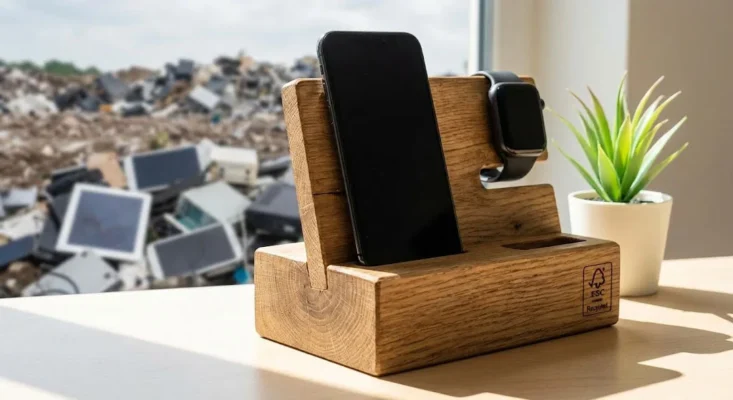
In 2026, the American consumer is hyper-aware of “E-waste.” Mass-produced plastic docks are destined for landfills. In contrast, a solid wood organizer is biodegradable and carbon-sequestering. By choosing FSC-certified timbers or urban reclaimed wood, professionals are making a statement about their values. They are choosing a “responsible” tech suite that respects the environment as much as it respects the user’s need for efficiency.
The Sanctuary of Productivity
The ultimate 2026 workspace is one where the tools of the future are housed in the materials of the past. By adopting a “Hidden Tech” approach, you aren’t just organizing your desk—you are reclaiming your mental space. You are creating a sanctuary where you can harness the power of the most advanced technology on earth without being overwhelmed by its presence.
When you sit at a desk anchored by a solid wood organizer, with no wires in sight and every device in its place, you aren’t just ready to work. You are ready to lead.